Termite Treatment Services in Karachi
Termite Treatment Services in Karachi | Hafi Services
Silent wood damage, hollow-sounding doors, and fine mud tubes along skirtings—if any of this sounds familiar, you may be dealing with termites. At Hafi Services, we provide safe, effective, and locally tailored termite treatment services for homes, offices, warehouses, and construction sites across Karachi. From pre-construction soil barriers to discreet post-construction treatments in occupied apartments, our focus is simple: protect your structure and belongings with methods that respect your time, safety, and budget.
Call / WhatsApp: 03333099401 | Office: 70–71, 3rd Floor, Habib Chamber, Main University Road, Block-14, Gulshan-e-Iqbal, Karachi-Pakistan. For quick scheduling or questions, you can also reach us via our Contact page for a free inspection.
Why Choose Hafi Services for Termite Control in Karachi
Local presence, rapid response
We operate from Block-14, Gulshan-e-Iqbal, enabling fast access to neighborhoods such as PECHS, Clifton, DHA, North Nazimabad, Federal B Area, Scheme 33, and Korangi/Malir. Our coordinators try to secure same- or next-day slots where scheduling allows, and we can arrange Friday or after-hours visits for businesses that prefer minimal downtime.
Full coverage across your use cases
Whether you need post-construction termite treatment for an occupied apartment, pre-construction anti-termite soil treatment for a new build, or specialized service for corporate facilities and storage, we plan the method to fit your structure and timeline. For customers exploring preventative barriers on new projects, our team explains staging clearly—before PCC, at plinth level, during backfill, and at utility penetrations—so work never conflicts with other trades.
Safety-first methods and clear guidance
Your family, staff, and pets come first. We use targeted application to minimize exposure, ventilate treated areas appropriately, and brief you on room re-entry timing. Our technicians wear PPE, isolate work zones, and share a simple prep list (decluttering near skirtings, lifting rugs where feasible, planning ventilation). We also avoid one-size-fits-all promises: buildings differ by age, moisture conditions, and construction, so your proposal will match your site—not a generic template.
Transparent process and documentation
Before work begins, you’ll receive a written scope outlining the areas to be treated, treatment sequence, homeowner or facility prep, and aftercare steps. Post-work, we leave your site tidy, seal injection points neatly, and confirm re-entry windows. If you’d like to learn more about our background, values, and team culture, see our About page.
Signs You Need Termite Treatment
Common indicators inside and around the structure
Mud tubes on foundation walls, columns, or along skirtings are a classic signal of subterranean termite activity. Indoors, hollow-sounding or blistered wood, crumbly door frames, and subtle paint ripples can point to hidden galleries. You might also notice discarded wings near windows or lights after a swarming event, or small, pellet-like debris from wood members. In cupboards, wardrobes, and store rooms—especially those shared walls with bathrooms—tap wood gently; a drummy sound suggests voids.
Karachi-specific triggers that increase risk
Termites thrive in moisture and easy soil access. In Karachi, monsoon seepage, roof leaks, and undetected plumbing drips often supply the moisture they need. Ground-contact wooden elements (garden edging, temporary shuttering wood left onsite), old termite shields that were never maintained, and expansion joints without a continuous barrier are common entry points. Apartments with attached bathrooms or kitchens along exterior walls also see activity where moisture wicks into door frames and skirtings.
Quick self-check before you book an inspection
Use this simple checklist to decide if it’s time to call:
- Walk the perimeter: do you see pencil-thick mud tubes where the foundation meets soil or in car porch corners?
- Tap wooden door frames and built-in cupboards: do they sound unusually hollow or crumble at edges?
- Look behind stored items: any blistered laminate or paint bubbles along skirting lines?
- After rain or water leaks: have you noticed swarmers (winged termites) or piles of wings near windows?
- Check bathrooms and kitchens: are thresholds soft, or do screws in hinges suddenly lose grip?
If you’ve ticked even one of these, schedule a free inspection. Early intervention limits structural repair costs and reduces the need for more invasive work later.
Our Termite Treatment Options
Post-Construction Termite Treatment
For furnished apartments, houses, and active offices across Karachi, we start with a careful termite inspection to map activity and access points. Where structural conditions allow, we use a drill–inject–seal approach along skirtings, expansion joints, and utility entries to create a protective band without unnecessary drilling. We complement this with discreet wall void, door-frame, and built-in cupboard treatments so you don’t have to dismantle furniture. Many clients refer to this as a “termite spray service,” but in practice it’s a targeted, measured application designed to reach termite pathways while minimizing disruption.
In a typical Gulshan-e-Iqbal apartment, we might stage work room-by-room so the family can keep living in the home. For a small Clifton office, we schedule after-hours so staff return to a tidy workspace the next morning. Re-entry times and ventilation instructions are shared in writing so everyone stays safe. Follow-up checks are booked during the warranty window to confirm results and address any fresh signs quickly.
Pre-Construction Anti-Termite Treatment
Pre-construction (sometimes called “anti termite treatment”) is the most cost-effective way to protect a new structure. We coordinate with your builder to treat compacted soil before PCC, reinforce at plinth beams, and continue during backfill so the barrier remains continuous. Utility penetrations—water, sewer, and electrical—receive special attention to block subterranean termite ingress. For plot houses in Scheme 33 or larger DHA builds, we create a stage-by-stage plan so treatment never clashes with steel fixing, shuttering, or waterproofing.
Because Karachi’s monsoon and high groundwater can challenge barriers, we specify treatment zones around soak pits, water tanks, and damp-prone perimeters. If you’re phasing construction, we document which areas are complete and which will need treatment later. That way, you avoid gaps when additional rooms, basements, or boundary walls are added. The result is a robust foundation defense long before termites find your wood.
Baiting & Monitoring
In sensitive sites—daycares, clinics, or showrooms—baiting offers a lower-odor, minimally invasive alternative. We place bait stations in strategic outdoor and indoor locations, then monitor and replenish them as termites feed and transfer the active ingredient through the colony. This approach suits landscaped properties in DHA or Clifton where drilling every few feet would be impractical. It also pairs well with selective injections in hotspots, accelerating overall control.
Success with baits requires patience and consistent visits. We’ll set a cadence—often every few weeks initially—so we can track consumption and adjust placements. You’ll receive progress notes after each visit, with photos of indicators like mud tube disruption or reduced feeding. Once activity collapses, we switch to a lighter monitoring schedule so issues don’t reappear quietly.
Wood Protection & Targeted Treatments
Karachi homes rely heavily on wooden door frames, wardrobes, and false ceilings, which can become termite highways. For these elements, we use targeted methods such as void injections, borate-based wood preservation, and precise foaming where galleries are suspected. This focuses effort where cellulose is abundant without blanketing entire rooms. It’s especially effective in bathrooms and kitchens where moisture wicks into wood from adjacent walls.
In practice, a North Nazimabad home might get gallery injections along a single wall of cupboards plus protective treatment on all door frames. A PECHS apartment with a soft wooden floor area could receive selective plank-edge treatment to avoid lifting the entire floor. We finish by sealing access points neatly and sharing care instructions to help the protection last. If you’re planning carpentry upgrades, we’ll advise the best time to add preventive wood treatments.
Eco-Conscious Options
When clients ask for “eco friendly termite treatment,” we prioritize targeted application, containment, and ventilation rather than blanket spraying. We select lower-odor formulations where appropriate and sequence rooms so sensitive occupants can avoid work zones. Clear re-entry windows and post-treatment airing help keep indoor air fresh. We also review moisture control steps—fixing leaks and improving drainage—because drier structures need less intervention over time.
For example, a daycare in Bahadurabad might combine baiting at the perimeter with limited indoor spot work after hours. A boutique in Zamzama could receive short, tightly scheduled visits that align with opening times and HVAC cycles. These choices support safety and comfort while maintaining effective termite control in Karachi. Your written proposal will spell out exactly how we minimize exposure for people and pets.
Residential vs. Commercial & Corporate Treatments
Residential
Homes require a balance of thoroughness and livability. We stage work to keep everyday life moving—one or two rooms at a time, moving furniture minimally, and safeguarding children’s play areas and pet zones. In apartments, we coordinate with building management on drilling permissions and quiet hours. After completion, you’ll get a simple aftercare checklist tailored to Karachi realities: manage seepage quickly, keep skirtings dry post-mopping, and watch for swarmer wings during the monsoon.
For a typical 3-bed in Gulistan-e-Jauhar, the team might finish in a day, with a follow-up check a few weeks later. For larger bungalows with lawns, we extend the perimeter band and may add bait stations near irrigation points. Clear documentation explains what was treated, what to monitor, and who to call if you spot new activity. That transparency helps you nip problems early rather than wonder what’s “normal.”
Commercial & Corporate
Business sites prioritize uptime and documentation. We offer after-hours and Friday scheduling, create floor-by-floor plans for multi-storey offices, and provide treatment reports suitable for facility files. For sensitive areas—server rooms, clinics, or labs—we mix baiting and localized injections to protect equipment and meet hygiene expectations. When work happens in high-traffic spaces, we cordon zones clearly and schedule short, repeatable windows so operations stay on track.
A Saddar retail outlet might receive focused treatment behind displays and along storage walls to avoid extended closures. A Sharah-e-Faisal office floor could be split into wings, allowing one wing to operate while the other is treated. You’ll know exactly when spaces can be reoccupied and which housekeeping steps matter most afterward. The result is reliable termite proofing services without unnecessary downtime or guesswork.
Warehouse & Container Fumigation
Scope for Warehouses, Yards, and Storage
Termites and other wood-damaging pests can enter supply chains through pallets, crates, and stored timber. For warehouses and distribution centers in Karachi—SITE, Korangi Industrial Area, Keamari, or Port-adjacent yards—we design programs that combine inspection, targeted treatment, and where appropriate, fumigation protocols under controlled conditions. The priority is twofold: protect wooden packaging and prevent movement of infestation to downstream customers.
Our team surveys inbound and outbound lanes, pallet stacks, and long-stay storage bays. We identify hotspots (leaky roofs, damp corners, sun-shaded walls that stay humid) and propose treatment intervals that match your throughput. Clear staging helps operations continue with minimal disruption—zones are marked, and product handling teams receive simple do’s and don’ts for the treatment window.
Containers & Pre-Shipment Readiness
Where termite risk is linked to wooden dunnage, crates, or product packaging, we plan container work to fit yard schedules. That includes pre-inspection, preparing the container, controlled exposure periods when applicable, and measured aeration/clearance before release. We coordinate with your logistics team to reduce dwell time while still giving the process its full, safe duration.
If you maintain your own pallets, we’ll recommend segregation for suspect lots and monitoring points near damp concrete, grass verges, or water runoffs. Visual cues—mud tubes on pallet blocks, frass beneath stacks—are documented with photos so your QC team can act quickly even between service visits.
Safety, Documentation, and Coordination
Industrial sites demand predictable procedures. We issue a written scope for each visit, cordon active zones, and provide re-entry or re-handling guidance in plain language. Technicians wear PPE, equipment is checked before use, and housekeeping leaves areas clean. On request, we share broad safety data and a simple briefing for supervisors to cascade to shift teams. We avoid operational surprises: if weather or yard congestion would reduce effectiveness, we reschedule rather than cut corners.
Our Process
1) Booking & Inspection
Call or message us to book a free inspection. A trained inspector visits your site—home, office, warehouse, or yard—to assess signs of subterranean termites (mud tubes, moisture-linked damage, hollow wood). We also note construction factors: foundation type, boundary walls, expansion joints, landscaping, and known leak points. The aim is to map termite pathways so the proposal fits your exact structure, not a generic template.
2) Written Proposal & Scheduling
You receive a clear, written scope: areas to be treated, method and sequence (e.g., band treatment, injections, baiting), occupant prep, and re-entry guidance. For businesses, we include after-hours or Friday options; for new builds, we align with your civil schedule (before PCC, at plinth, during backfill). Pricing is attached to the defined scope so you know what’s included and how follow-ups are handled during the warranty window.
3) Treatment Day Walk-Through & Execution
On arrival, the team conducts a quick walk-through to confirm rooms, access, and any last-minute constraints. We protect furnishings where needed, drill only where necessary, and seal points neatly after injections. In sensitive sites, we combine localized injections with baiting to limit disruption. Communication is constant: which zone is active now, when to ventilate, and when you can re-enter.
4) Cleanup, Sealing & Re-Entry
After treatment, work areas are cleaned and drill sites sealed. We review re-entry times, ventilation steps (open windows/doors, fans if available), and housekeeping (avoid washing treated skirtings immediately). You get a short handover note so everyone in the property knows what to expect over the coming days.
5) Monitoring & Follow-Up
Termite activity often subsides in stages. We schedule a follow-up to verify results, check previously active spots, and adjust bait placements if used. During the warranty window, if you see fresh signs, call us—verification visits are arranged so we can respond before damage escalates.
Warranty & Aftercare
Clear Coverage, No Guesswork
Your proposal includes a written warranty period for treated structures, with straightforward terms. We define what’s covered (fresh activity in treated zones) and what isn’t (new construction beyond treated boundaries, major renovations without re-treatment, new leaks that introduce moisture). Clarity helps you plan maintenance—especially around bathrooms, kitchens, and perimeters that historically collect moisture.
Preventive Care for Karachi’s Climate
Moisture control is half the battle. Fix seepage quickly, especially during monsoon. Keep soil and mulch slightly away from exterior walls, trim plants that trap humidity, and inspect door frames that share walls with bathrooms. For ground floors, ensure proper slope so water doesn’t pool against foundations. If you’re renovating, consult us about preserving or re-establishing barriers at new utility penetrations and joints.
When to Call Us
If you notice new mud tubes, blistered paint reappearing, soft door thresholds, or swarmer wings, reach out right away—don’t wait for the next scheduled check. We’ll guide you on what to photograph and how to avoid disturbing evidence before the verification visit. Early calls keep interventions small and prevent rework to finishes and furniture.
Pricing in Karachi — What Affects Termite Treatment Cost
Key Factors That Shape Your Quote
Because every structure is different, we don’t publish one-size-fits-all prices for termite treatment cost in Karachi. Instead, we inspect first and price against a defined scope. The main cost drivers include built-up area or linear footage of treatment, construction type (raft, basement, boundary walls), infestation severity, and whether it’s pre-construction or post-construction termite treatment. Access matters too—tight corridors, delicate finishes, and after-hours scheduling can influence crew time.
Moisture conditions also play a role. Properties with seepage or active leaks may need additional attention around bathrooms, kitchens, and exterior perimeters. For bungalows with lawns or landscaped perimeters, expanding the exterior band and adding bait stations can increase scope. After inspection, you’ll get a clear proposal with inclusions, exclusions, and a warranty window so you understand value—not just a number.
How We Keep Quotes Fair and Transparent
We separate the inspection (free), treatment scope, and follow-up plan so you see where time and materials go. If you’re comparing quotes, check that they include staging, re-entry guidance, and at least one verification visit. We welcome questions and can explain how alternative methods—like baiting versus a full perimeter barrier—affect both the cost and the timeline. Our goal is a durable result that fits your budget and the realities of Karachi’s climate.
Preparation & Safety Instructions
Before Treatment
Declutter along skirtings and affected walls, lift small rugs where feasible, and clear the base of wardrobes or cupboards that show activity. Secure pets and plan ventilation (windows/fans). If you’ve had recent leaks, try to fix them before treatment day; a drier structure responds better and stays protected longer. For offices and shops, inform staff about room sequencing so operations continue smoothly.
During Treatment
We work zone by zone. Please keep people and pets out of the active area and follow cordon signs. If drilling is needed, we protect nearby surfaces and clean as we go; wall or floor injections are sealed neatly afterward. For sensitive environments (clinics, server rooms), we may combine localized injections with baiting to minimize disruption and odor.
After Treatment
Ventilate each treated room for the advised window, then return furniture gradually. Avoid washing treated skirtings immediately; use a light dry wipe if needed. Over the next 2–6 weeks, watch for mud tube disruption or reduced frass; if you notice fresh activity, contact us promptly within your warranty window so we can verify and respond.
All Services
Frequently Asked Questions
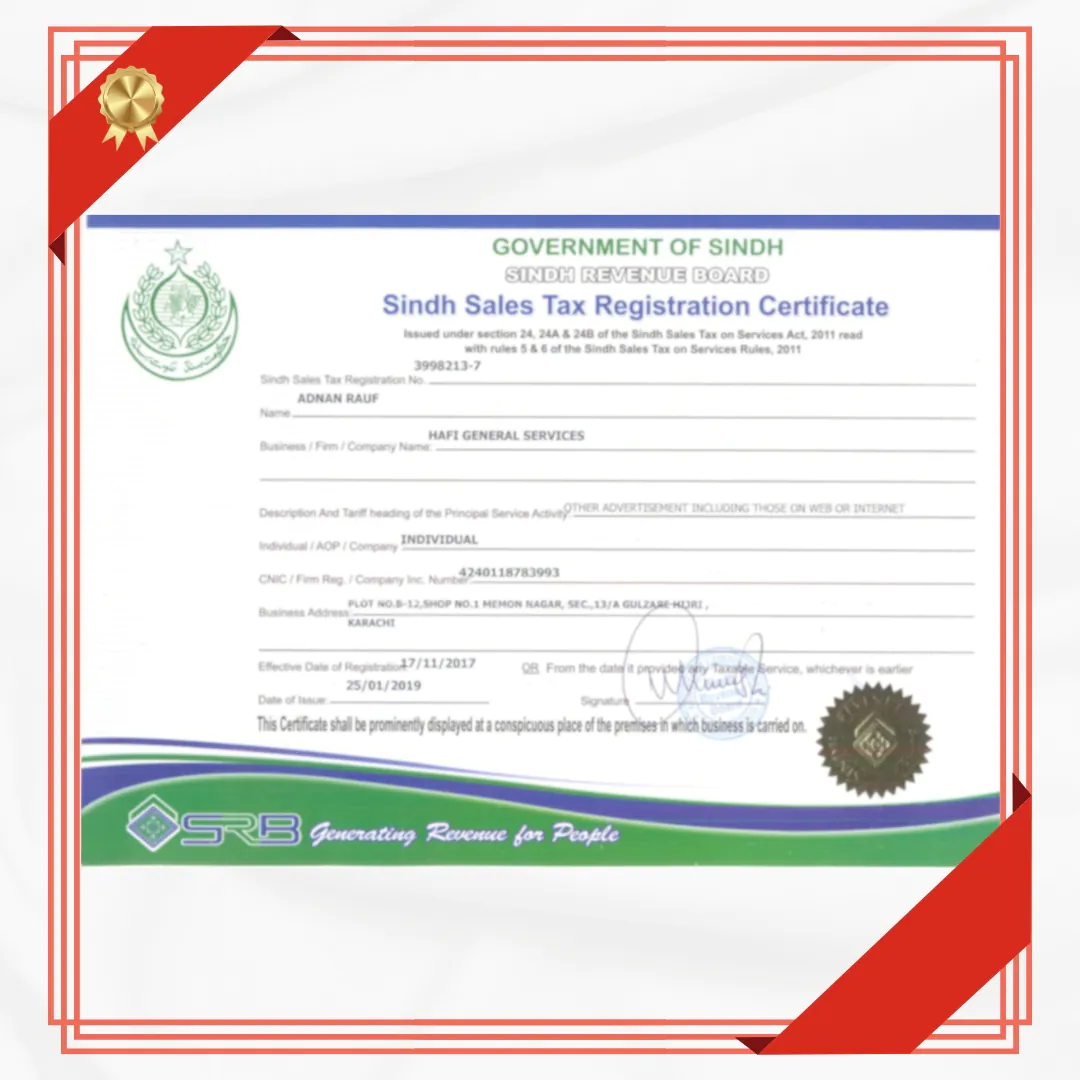
Our Certificate







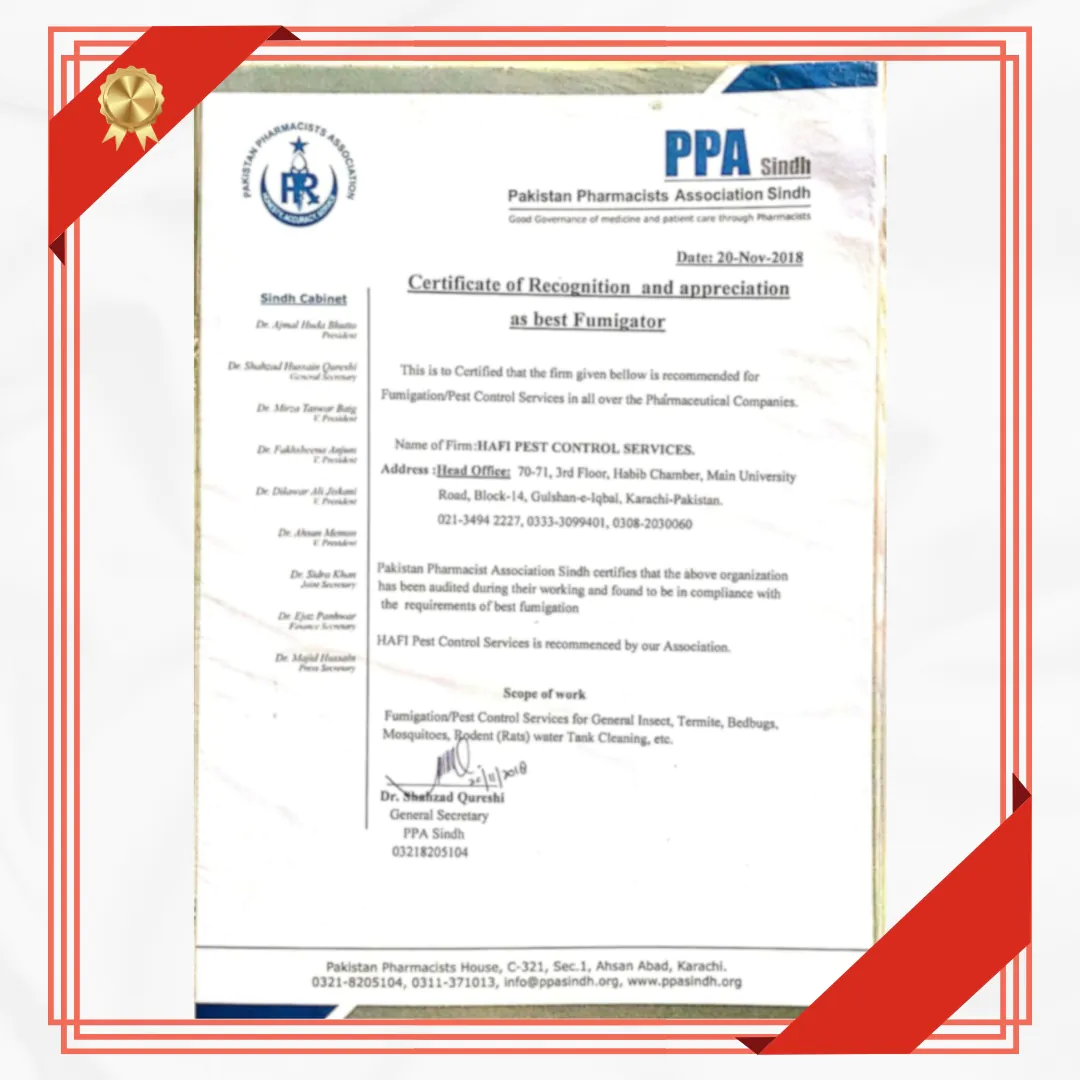
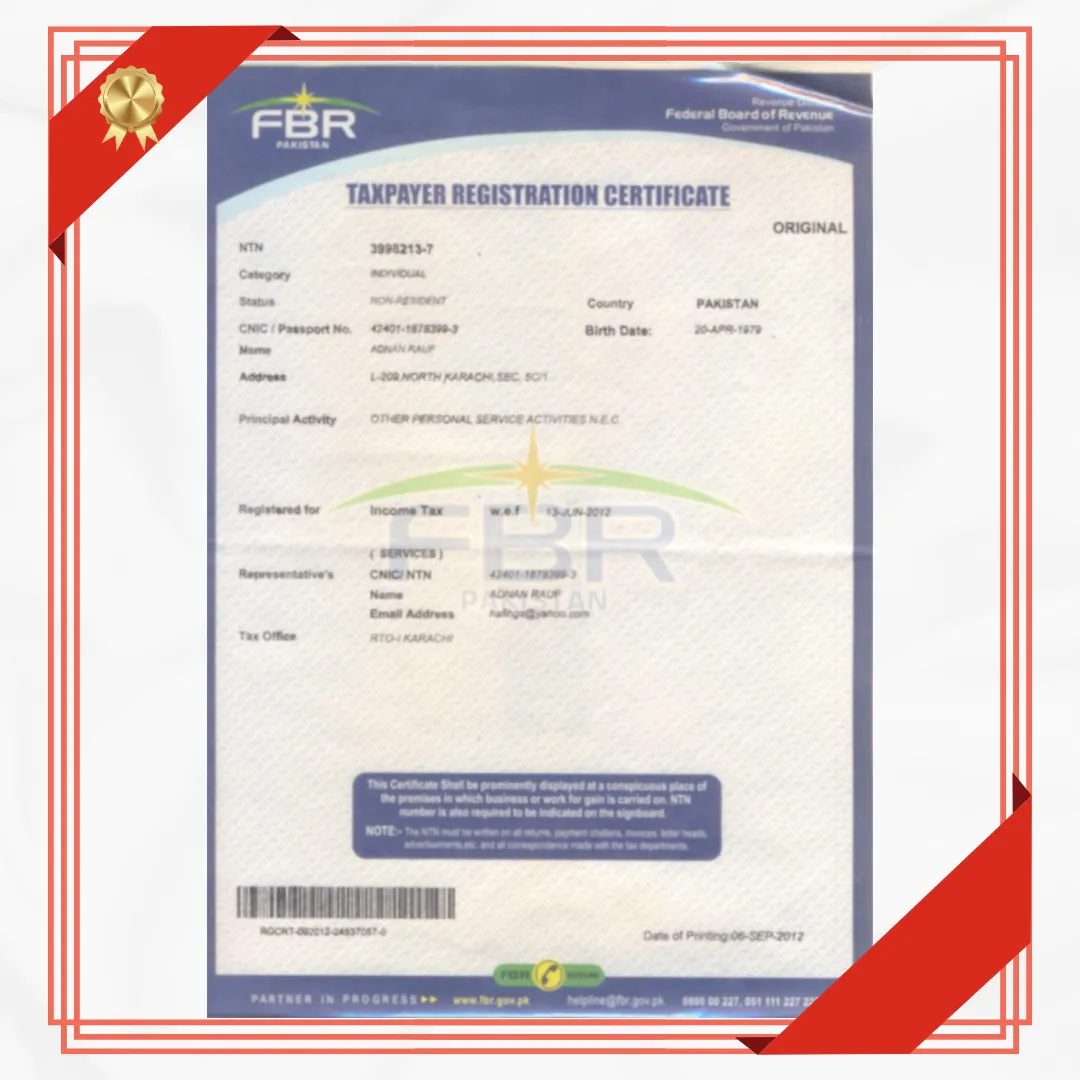
Call Us Today
+923333099401
We are always keen to help any individual, Business & Corporate to get rid of Pests. you can ask for Free Inspection.
What Our Clients Say About Our Services
We have almost provided all Kinds of Fumigation and Pesticide services to our clients for residential and commercial purposes.